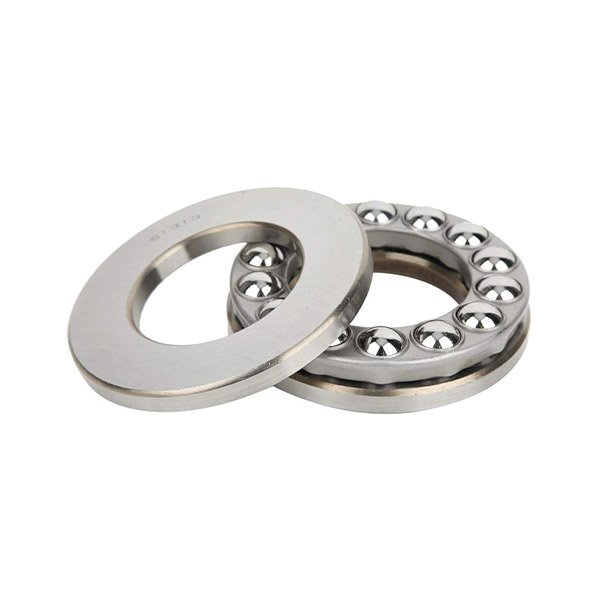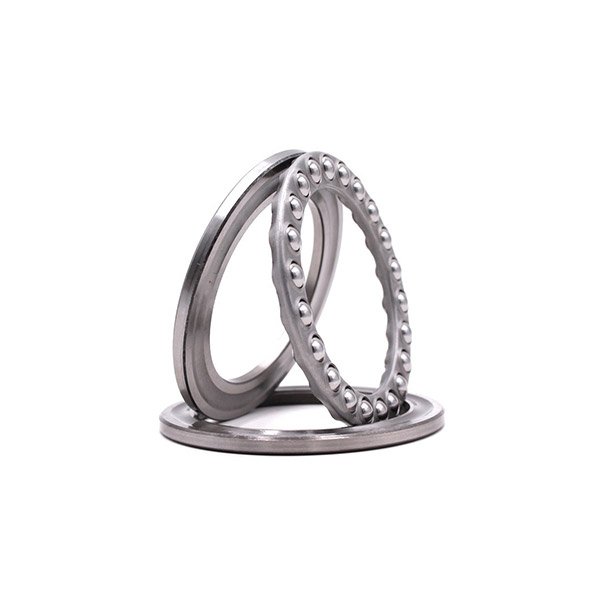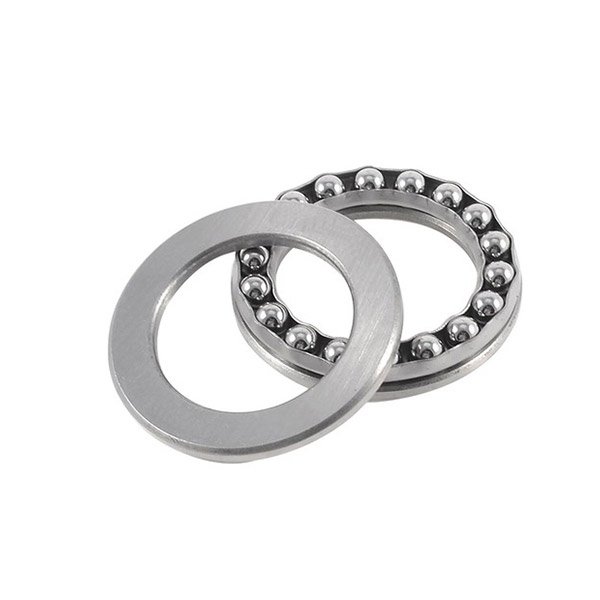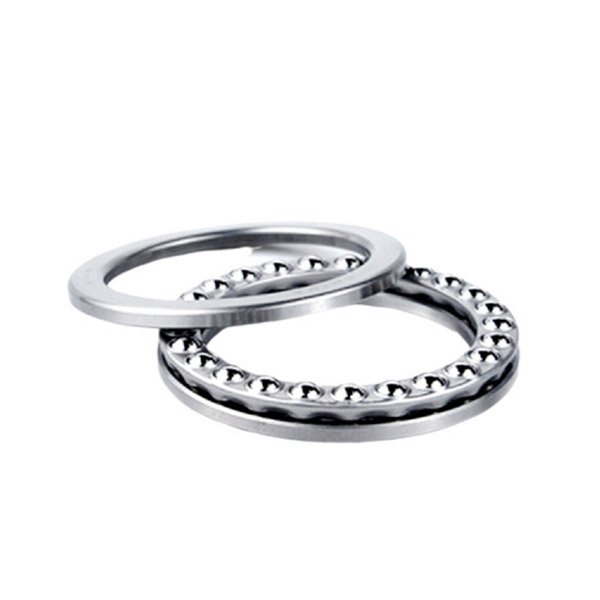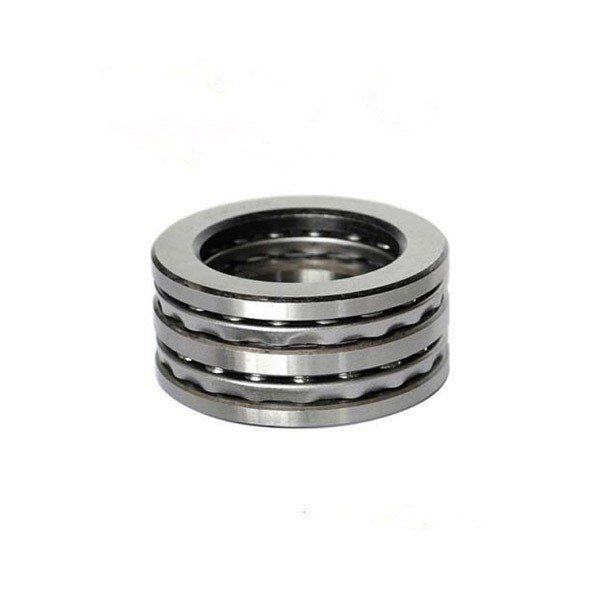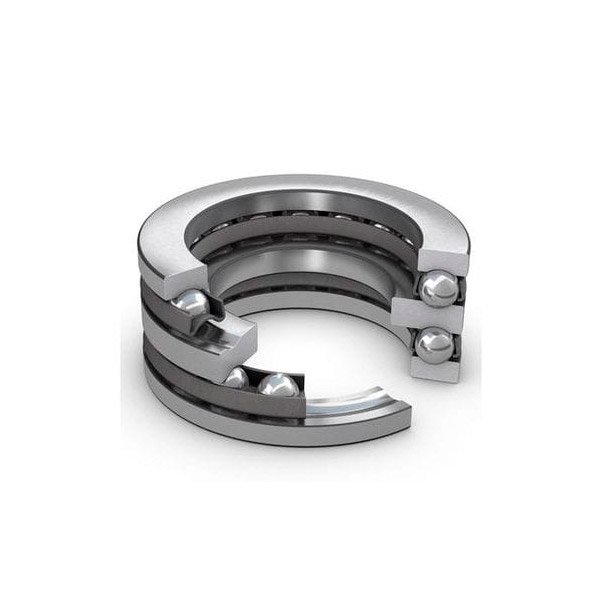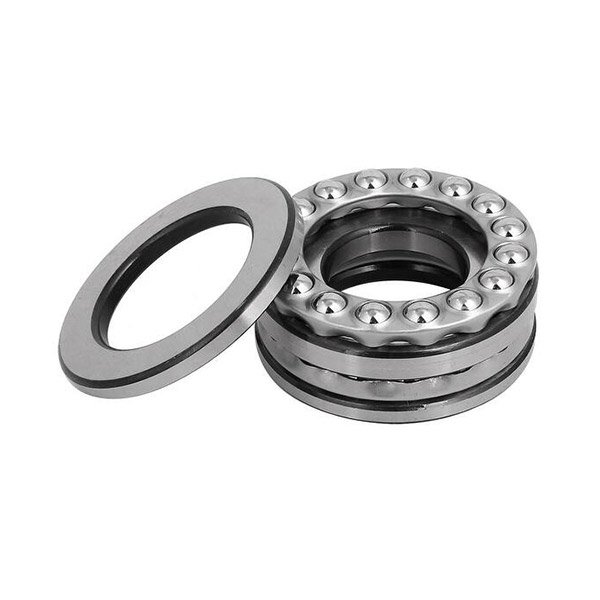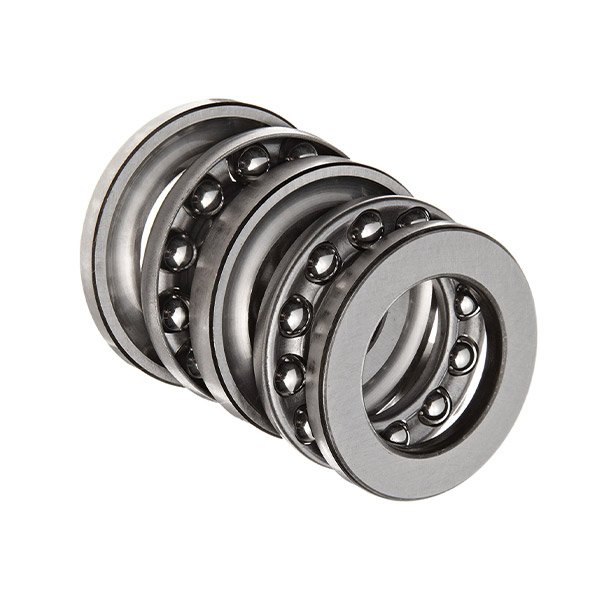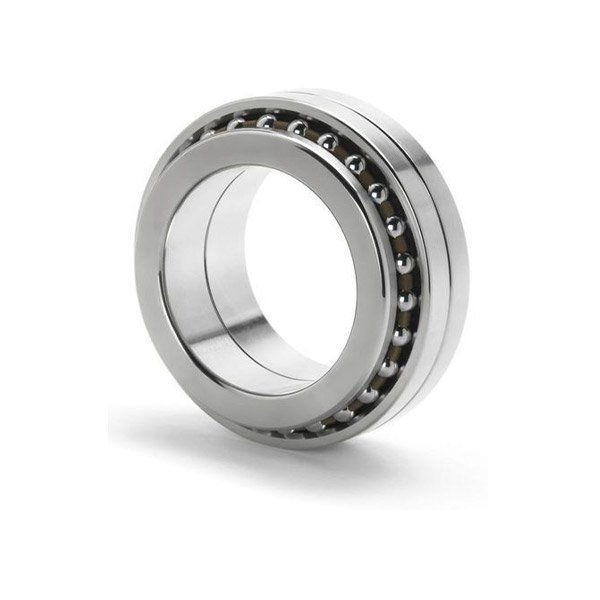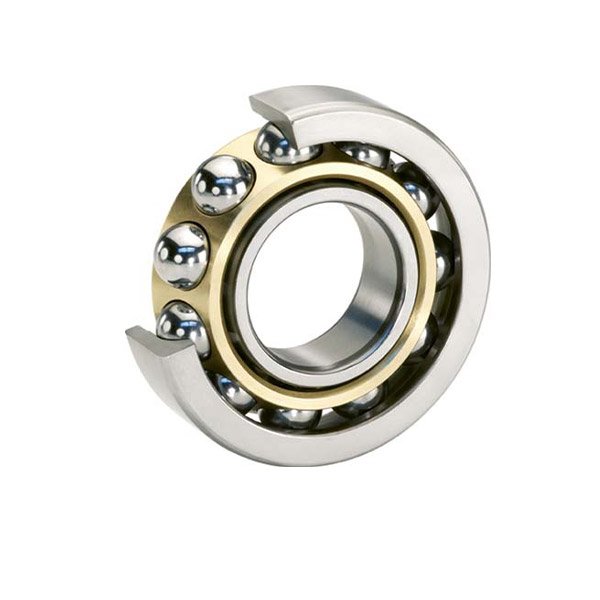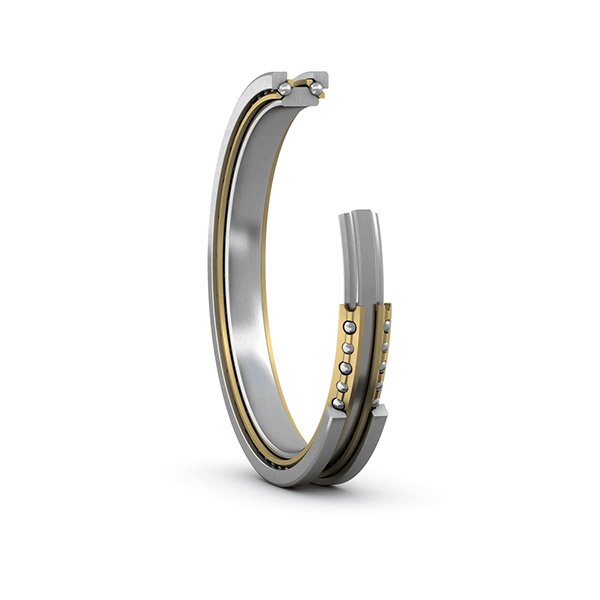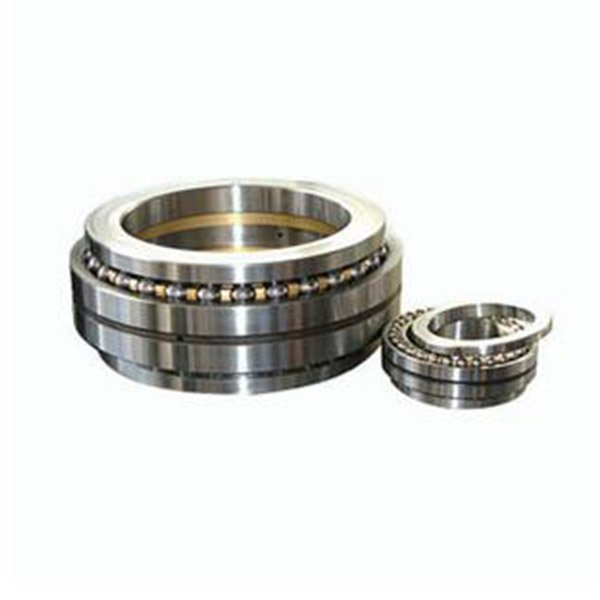
Thrust ball bearings are separable, including shaft washers, bearing seat washers, a set of steel balls and cage, which makes it very convenient to install the journal and bearing seat separately. thrust ball bearings have different structures, which can be divided into single direction thrust ball bearings, double directions thrust ball bearings and angular contact thrust ball bearings.
Single direction thrust ball bearing can bear axial load in one direction, but cannot bear radial load. Single direction thrust ball bearings can do single-direction axial positioning. Single direction thrust ball bearings are divided into flat races and self-aligning races. Generally, the angle error of the flat seat ring is not allowed, but in the support design, a gap of 0.5~1mm can be left between the outer diameter of the seat ring and the mating surface of the bearing seat for compensation. Thrust ball bearings with a self-aligning seat can also be used to compensate for the angular error in the installation, but the self-aligning seat needs to be ordered separately.
Double direction thrust ball bearings can bear axial loads in two directions, but cannot bear radial loads. Double direction thrust ball bearings can do axial positioning in two directions. Double direction thrust ball bearings are also divided into flat races and self-aligning races. Generally, the angle error of the flat seat ring is not allowed, but in the support design, a gap of 0.5~1mm can be left between the outer diameter of the seat ring and the mating surface of the bearing seat for compensation. A thrust ball bearing with a self-aligning seat can also be used to compensate for the angular error in the installation, but the self-aligning seat needs to be ordered separately.
Angular contact thrust ball bearings mainly bear axial load, but can also bear a small amount of radial load. Compared with thrust ball bearings of the same size, the allowable limit speed is higher. It can do single-direction axial positioning. Angular contact thrust ball bearings mainly have two contact angles of 45°and 60°, which are especially suitable for applications where the combined load is mainly axial load and a certain radial load. It can also compensate for the lack of plane thrust ball bearings that can only bear axial loads but cannot bear radial loads. The size of the radial load that the structure can bear depends on the size of the contact angle. Generally speaking, the smaller the contact angle, the greater the ability to bear the radial load.
 TECHENGINEERING
G-202 Shree Ratna Complex, Ahmedabad, Gujarat, INDIA
+91 81412-84858
info@techengineering.in
© 2023 TechEngineering All Rights and Wrongs Reserved.