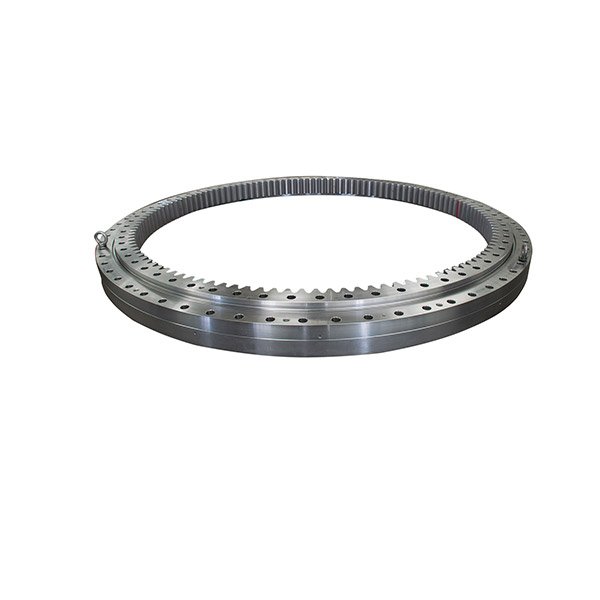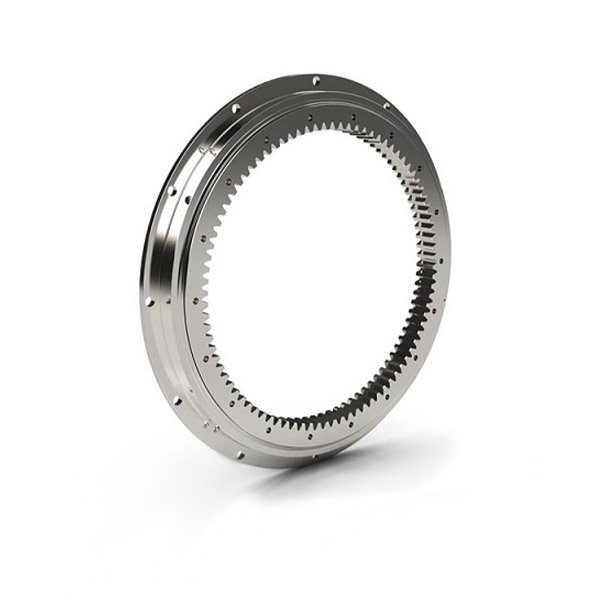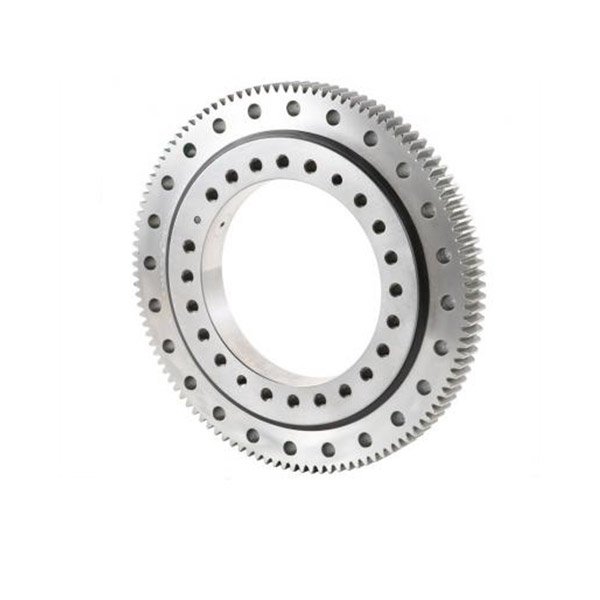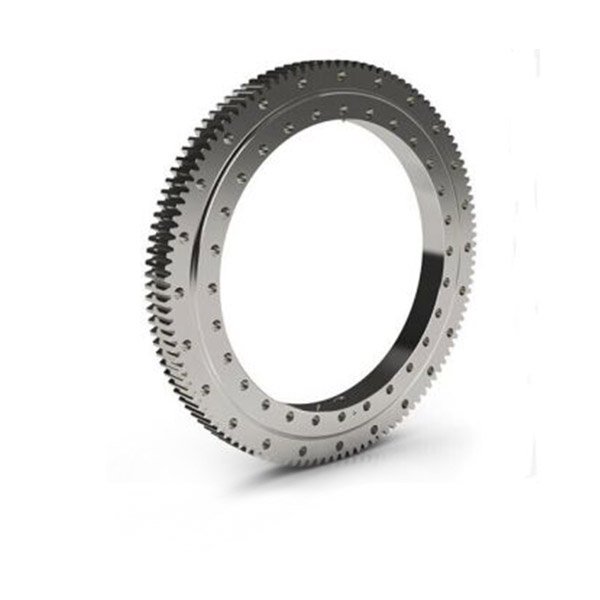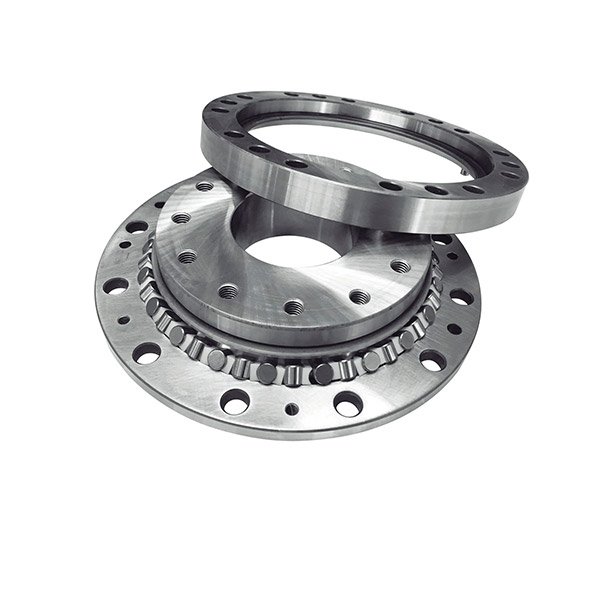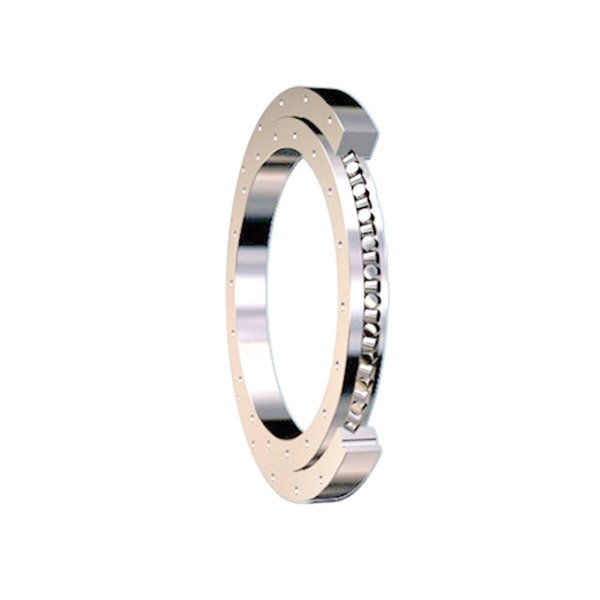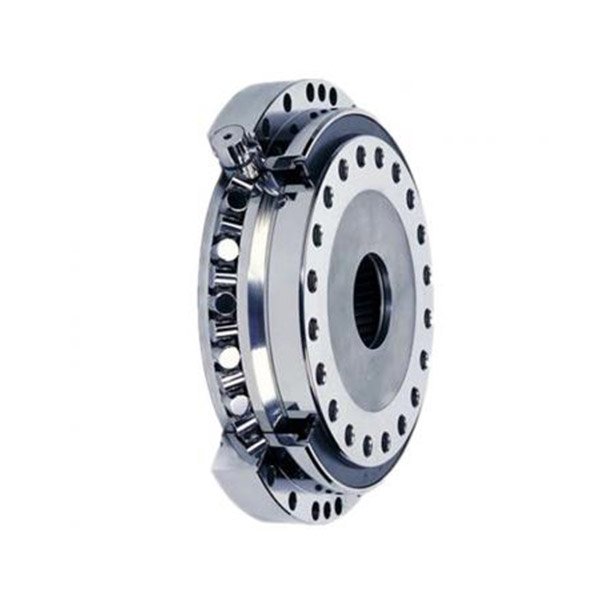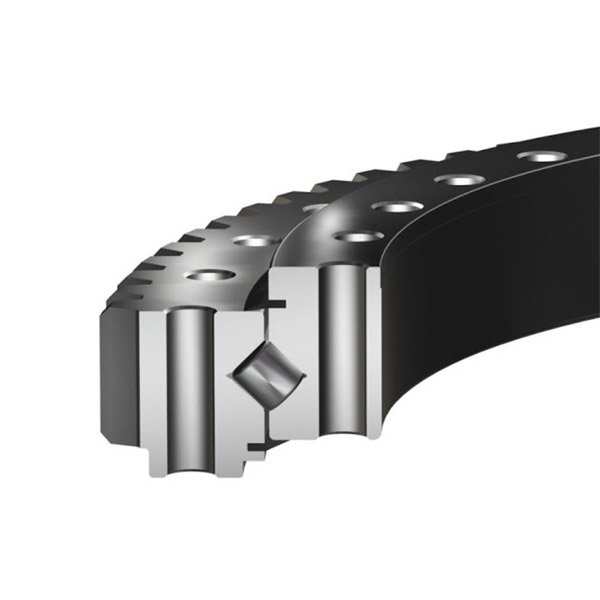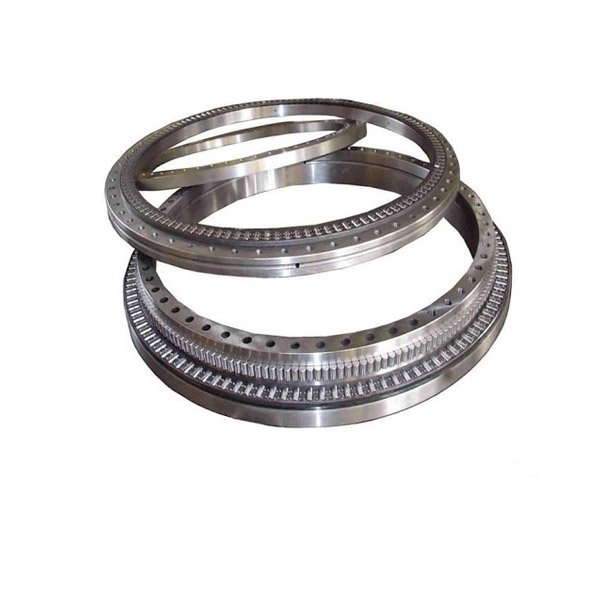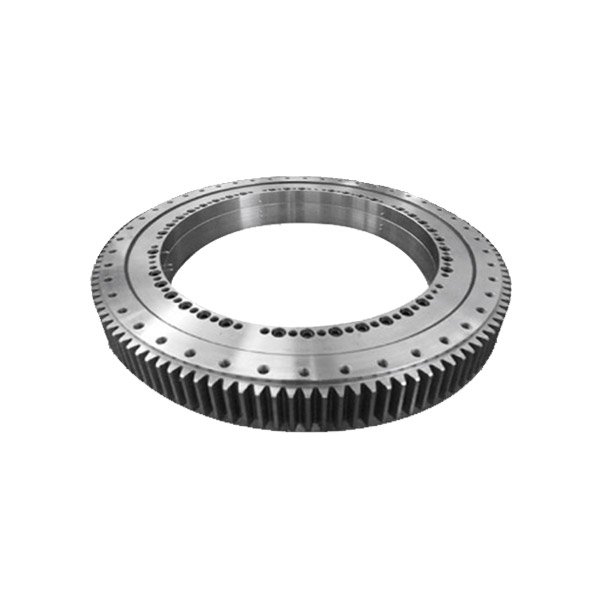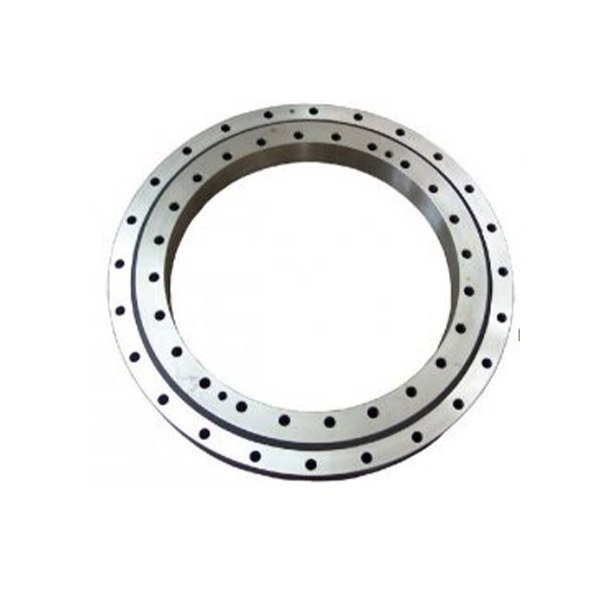
Slewing ring is a large bearing with a special structure, which can bear comprehensive loads such as shaft load, radial load and overturning load. It combines support, rotation, transmission, fixing, sealing, anti-corrosion and other functions into one unit. It is widely used in hoisting machinery, construction machinery, transmission machinery, mining and metallurgical machinery, medical equipment, radar, shipbuilding, wind power and other industries. The slewing bearing is the same as the ordinary bearing, it is assembled by rings and rollers. However, compared with ordinary bearings, slewing bearings have many differences. Generally, the size of the slewing bearing is very large, and the outer diameter is usually between 0.4m and 10m, and some even between 40m. Under normal circumstances, the slewing ring runs under low-speed and high-load conditions. The slewing bearing has mounting holes, lubrication holes and sealing devices. It has the characteristics of compact structure, convenient rotation, simple installation and convenient maintenance.
Crane & Excavator
Stacker and reclaimer slewing ring
Forklift rotor
Turnstile
Water treatment facility
Mining Equipment
Radar antenna
Winding machine
Clarifier, Thickener and Rotary distributor
Pay-off wheel
Four-point contact ball slewing bearing is mainly composed of an inner ring, an outer ring, a row of steel balls and a cage (or spacer). Four-point contact ball inner ring, and the outer ring has an integral and split structure. Four-point contact ball slewing bearing can bear axial load, overturning moment and radial load at the same time. Almost all steel balls will bear the load under the combined action of the axial load and the tilt moment load. When bearing a pure axial load, the steel balls are in contact with the raceways of the outer ring and the inner ring respectively. When the radial load exceeds a certain value, the contact balls in the outer raceway and the inner raceway will have two points respectively.
Crossed cylindrical roller slewing bearing is composed of inner ring, outer ring, single row roller, cage (gasket) and sealing device. Crossed cylindrical roller slewing bearings can bear axial load, overturning moment and radial load at the same time. The design and application of the cross roller slewing ring are basically the same as the design and application of the four-point contact ball slewing ring. The difference is that the rolling element is replaced from the ball to the roller, and the contact method between the rolling element and the ring is changed. . Point contact becomes line contact. These changes allow for an increase in load carrying capacity, but wear and friction moment loads also increase.
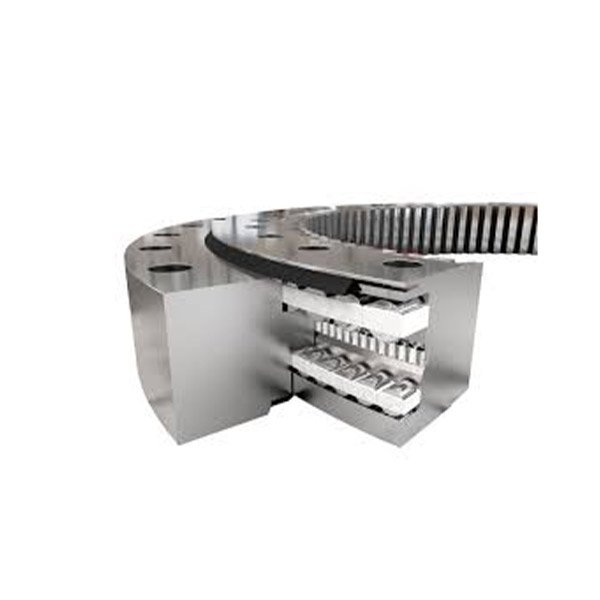
Three-row roller slewing bearings are mainly composed of inner ring, outer ring, three-row rollers, cage (spacer block), sealing device, etc. This slewing bearing design is suitable for most large-scale occasions with axial load and tilting moment, or with larger radial load, or with lower requirements for frictional moment. Three-row roller slewing bearings can simultaneously bear axial load, tilting moment and radial load. Compared with the cross cylindrical roller slewing bearing, the load of each roller is reduced. Compared with double row roller slewing bearings, point contact becomes line contact, and the contact stress is also reduced.
 TECHENGINEERING
G-202 Shree Ratna Complex, Ahmedabad, Gujarat, INDIA
+91 81412-84858
info@techengineering.in
© 2023 TechEngineering All Rights and Wrongs Reserved.